Living in a region prone to freezing temperatures, heavy snowfall, and icy winds can make securing your property a unique challenge. Standard security cameras often falter when the mercury drops, leaving your home or business vulnerable. The good news is that advancements in surveillance technology have led to a new generation of security cameras specifically engineered to withstand the harshest winter conditions. This guide will walk you through everything you need to know about choosing, installing, and maintaining the best security cameras for cold climates, ensuring unwavering vigilance no matter how severe the weather.
Understanding Cold Climate Security Cameras
A cold climate security camera is specifically designed to operate reliably and effectively in sub-zero temperatures, resisting damage and performance degradation from frost, ice, snow, and extreme cold. Unlike conventional cameras that might experience battery drain, lens fogging, or complete failure in freezing conditions, these specialized units incorporate features that ensure continuous surveillance and peace of mind even when winter bites hardest.
Historically, early security cameras were largely confined to indoor use or required extensive, bulky housings for outdoor protection. Over time, engineering innovations led to more robust designs with weatherproofing. The advent of modern cold climate cameras leverages advanced materials, built-in heating elements, and optimized power solutions to push operational temperature limits significantly, allowing them to function in environments previously deemed impossible for electronic surveillance.
Types of Security Cameras for Harsh Winters
When considering security cameras for cold climates, it’s essential to look beyond general classifications and focus on how different types perform under stress.
Wired Security Cameras (PoE & Analog)
- Power over Ethernet (PoE) IP Cameras: These are often the most reliable choice for extreme cold. PoE cameras receive both power and data through a single Ethernet cable, eliminating the need for separate power outlets. This hardwired connection ensures a stable power supply that isn’t susceptible to battery drain in low temperatures. Many high-end PoE cameras also feature wider operating temperature ranges and robust enclosures.
- Advantages: Highly reliable power and data, often come with wider temperature ratings, built-in heaters in premium models.
- Disadvantages: More complex installation requiring cable runs, higher initial setup cost.
- Suitable Applications: Permanent installations, areas requiring 24/7 uninterrupted surveillance in extreme cold.
- Analog Cameras: While less common for new installations, some analog systems with appropriate enclosures can be adapted. However, they generally lack the advanced features and cold-weather specific engineering of modern IP cameras.
|
Our Picks for the Best Security Camera in 2026
As an Amazon Associate I earn from qualifying purchases.
|
||
| Num | Product | Action |
|---|---|---|
| 1 | Google Nest Cam with Floodlight - Outdoor Camera - Floodlight Security Camera, White, 1 Count (Pack of 1) |

|
| 2 | Tapo 1080P Indoor Pan/Tilt Wired Security Camera - Works as a Baby & Pet Monitor, Motion Detection, 2-Way Audio, Siren, Night Vision, Subscription-Free Local Storage or Optional Cloud, Black, C201 |
|
| 3 | TP-Link Tapo 1080P Indoor Security Camera for Baby Monitor, Dog Camera w/Motion Detection, 2-Way Audio Siren, Night Vision, Cloud & SD Card Storage, Works w/Alexa & Google Home (Tapo C100) |
|
| 4 | WYZE Cam Pan v3 Indoor/Outdoor IP65-Rated 1080p Pan/Tilt/Zoom Wi-Fi Smart Home Security Camera with Color Night Vision, 2-Way Audio, Compatible with Alexa & Google Assistant, White, 2-Pack |
|
| 5 | 2K No Drill Window Camera-2 Pack 2.4Ghz & 5Ghz WiFi Cameras for Home Security for Indoor & Outdoor Monitoring, Anti-Glare Color Night Vision, Human Detection, 24/7 Recording, Ideal for Apartment, K1 |
|
| 6 | aosu Security Cameras Outdoor Wireless, 4 Cam-Kit, No Subscription, Solar-Powered, Home Security Cameras System with 360° Pan & Tilt, Auto Tracking, 2K Color Night Vision, Easy Setup, 2.4 & 5GHz WiFi |
|
| 7 | WYZE Bulb Cam Security Camera, 2K HD Outdoor Light Bulb Camera, Color Night Vision, Dimmable LED Bulb, Motion Detection, Siren Alarm, Works w/Alexa/Google Assistant. Free Expert Support |
|
| 8 | 2K Cameras for Home Security-Outdoor/Indoor Camera for Dog/Cat/Pet/Nanny/Baby/Elderly, Color Night Vision, White Light, Siren, 24/7 SD Recordings, Works with Alexa, Plug in (C1-White-2pack-2.4G) |
|
| 9 | Tapo 2K+ Indoor/Outdoor Wired Security Camera - 2024 PCMag Editors' Choice, Person/Pet/Vehicle Detection, Baby Monitoring, Color Night Vision, Subscription-Free Local Storage or Optional Cloud, C120 |
|
| 10 | Google Nest Cam Outdoor (Wired, 2nd Gen) - 2 Pack - Security Camera with 2K Video and Gemini, Night Vision, 2-Way Audio - Works with Google Home - 2025 Model - Snow |
|
Wireless Security Cameras (Battery & Wi-Fi)
- Battery-Powered Wireless Cameras: Offer immense flexibility and easy installation. However, their primary drawback in cold climates is significantly reduced battery life. Lithium-ion batteries, common in these devices, lose efficiency rapidly below freezing temperatures, with performance often flatlining around -4°F (-20°C).
- Advantages: Easy to install, flexible placement, no wiring.
- Disadvantages: Poor battery performance in cold, frequent recharges/replacements, potential for frozen mechanical parts.
- Suitable Applications: Mild cold climates, areas where wiring is impossible and occasional monitoring is sufficient, or with supplemental solar power (if sunlight is reliable).
- Wi-Fi Cameras: These cameras rely on a Wi-Fi signal and often need a power outlet. While convenient, the Wi-Fi signal itself can sometimes be less stable in extreme weather or over long distances, adding another layer of potential vulnerability in harsh conditions.
Specialized Form Factors & Features
- Dome & Turret Cameras: These designs often offer good protection from snow and ice accumulation on the lens due to their shape, especially if mounted under an overhang.
- Bullet Cameras: While common, their protruding lens can be more susceptible to snow and ice buildup, requiring more frequent cleaning or strategic placement.
- PTZ (Pan, Tilt, Zoom) Cameras: While offering dynamic coverage, the moving mechanical parts of PTZ cameras can become sluggish or freeze in extreme cold. If choosing a PTZ, ensure it has a very wide operating temperature range and robust internal components.
- Heated Cameras: High-end models specifically designed for severe cold often integrate internal heating elements or defrosters to prevent lens fogging and ice formation, maintaining clear visibility.
Key Features for Cold Climate Security Cameras
Selecting the right camera means focusing on specific attributes that directly counter winter’s challenges.
- Operating Temperature Range: This is arguably the most critical specification. Look for cameras explicitly rated to operate in temperatures down to at least -22°F (-30°C), with some specialized models capable of handling -40°F (-40°C) or even lower. Ensure the camera’s minimum operating temperature matches or exceeds the lowest temperatures your area experiences.
- Weather Resistance (IP Rating): The Ingress Protection (IP) rating indicates how well a device is sealed against solids (dust) and liquids (water). For cold climates, an IP66 or IP67 rating is essential.
- IP66: Protected against powerful jets of water and totally dust-tight.
- IP67: Protected against temporary immersion in water (up to 1 meter for 30 minutes) and totally dust-tight. This level of protection ensures that melting snow, freezing rain, and ice won’t compromise the internal electronics. Some high-grade commercial cameras also feature NEMA 4X enclosures, which provide additional protection against corrosion, ice formation, and water spray.
- Built-in Heaters and Defrosters: Cameras with integrated heating elements are invaluable for preventing lens fogging, frost, and ice buildup. These features maintain clear image quality, eliminating the need for constant manual cleaning in freezing conditions.
- Power Source Reliability: For extreme cold, Power over Ethernet (PoE) offers the most reliable power delivery, as it’s less affected by temperature fluctuations than batteries. If choosing battery-powered cameras, consider models with large battery capacities, cold-weather-optimized batteries, or supplemental solar panels (understanding that solar efficiency can drop in low light/snow).
- Durable Materials and Construction: Cameras should feature robust housings, often made from high-grade plastics or metals designed to withstand thermal expansion and contraction cycles without cracking. Non-conductive materials can offer better insulation. Secure mounting hardware is also critical to prevent cameras from being dislodged by strong winds or accumulating ice.
- Enhanced Night Vision: In winter, daylight hours are shorter, and snow cover can sometimes reduce ambient light. Cameras with powerful infrared (IR) night vision or color night vision capabilities will ensure clear footage during long, dark nights.
- Lens Quality and Field of View: A high-quality lens resists optical distortions due to temperature changes. A wider field of view (FoV) can reduce the number of cameras needed, covering more ground and reducing potential blind spots that could be created by snowdrifts or temporary obstructions.
- Storage Solutions: Reliable local storage (e.g., SD card, Network Video Recorder/NVR) or cloud storage is crucial. Ensure that NVRs or base stations for local storage are kept indoors in temperature-controlled environments.
Buying Guide for Cold Climate Security Cameras
Making an informed decision about security cameras for freezing temperatures requires careful consideration of several factors.
1. Assess Your Local Climate
Before anything else, understand the specifics of your winter weather.
- Lowest Temperatures: What are the absolute minimum temperatures your region experiences? This directly dictates the required operating temperature range of your camera.
- Snowfall and Ice: How much snow and ice do you typically receive? This influences the IP rating and whether built-in heaters are a necessity.
- Wind Exposure: Strong winds can dislodge poorly mounted cameras and exacerbate cold-related issues.
2. Determine Your Power Needs and Infrastructure
- Wired (PoE): If you have the ability to run Ethernet cables, PoE is highly recommended for its reliability in cold. This might involve professional installation.
- Wireless (Battery/Solar): If wiring is not feasible, opt for battery-powered cameras with large capacities and check their low-temperature ratings. Consider solar panel attachments, but be mindful of reduced sunlight hours and efficiency in winter.
3. Prioritize IP Rating and Temperature Range
Do not compromise on these specifications. Aim for an IP66 or IP67 rating and an operating temperature range that covers your local extremes, ideally down to -40°F (-40°C) for truly harsh climates.
4. Consider Essential Features
- Built-in Heaters/Defrosters: A non-negotiable for areas with frequent frost, fog, or ice.
- Night Vision: Prioritize cameras with strong IR or color night vision.
- Material Durability: Look for robust housings and secure mounting options.
5. Plan for Installation and Placement
- Strategic Positioning: Install cameras under eaves, overhangs, or protective covers to shield them from direct snow, ice, and strong winds.
- Cable Protection: Ensure all cables are weatherproofed, properly sealed at entry points, and secured to prevent damage from freezing, thawing, and animal interference.
- Professional Installation: For hardwired systems, especially in challenging environments, professional installation can ensure optimal performance and longevity.
6. Research Brands and Models
Investigate brands with a reputation for producing robust outdoor security solutions. Look for user reviews from regions with similar climates to yours.
7. Check Warranty and Support
A good warranty for cold weather performance is crucial. Ensure the manufacturer offers reliable technical support, especially for specific cold-climate issues.
Popular Brands and Recommended Models for Cold Climates
Several brands offer cameras that stand up to freezing temperatures. Here are some trusted names and specific models known for their cold weather performance:
Popular Brands
- Hikvision & Dahua: Leading manufacturers in professional surveillance, offering a wide range of IP cameras, many with extensive temperature ratings and optional heaters, suitable for both residential and commercial use.
- Axis & Vivotek: High-end brands known for robust, enterprise-grade cameras with excellent build quality and advanced features, often including superior cold weather resilience and imaging technologies.
- Amcrest: Provides a good balance of features and affordability, with several models rated for wide temperature ranges.
- Google Nest Cam Outdoor: Known for smart features and decent cold weather performance, with some models rated to -40°F (-40°C).
- Arlo: Popular for wireless convenience, with some Pro series cameras offering respectable cold tolerance for battery-powered units.
- Eufy: Offers subscription-free options, often with robust IP ratings and solar charging capabilities.
- Lorex: Features a range of camera systems, including specific models designed for harsh outdoor conditions and wide operating temperatures.
- Blink: A budget-friendly option known for long battery life, with cameras performing well in moderately cold environments.
Recommended Cold Climate Security Camera Models
Here are a few specific models that consistently receive praise for their performance in freezing temperatures:
- Amcrest 4K Turret Camera: Often highlighted for its resilience, with an IP67 rating and an operating temperature range of -22°F to 140°F (-30°C to 60°C). It offers sharp 4K video quality, making it a reliable choice for severe cold.
- Google Nest Cam Outdoor: Certain models are rated to operate down to -40°F (-40°C) with an IP66 rating, combining robust cold performance with Google’s advanced AI detection features for intelligent alerts.
- Lorex 2K Indoor/Outdoor Spotlight Camera: Many Lorex models, particularly those in their professional-grade lines, are designed for harsh outdoor conditions and can operate down to -40°F (-40°C), providing excellent detail and spotlight functionality.
- Eufy SoloCam S40 / eufyCam S3 Pro: These models typically feature an IP67 rating, offering robust protection against water and dust. The SoloCam S40 includes a built-in solar panel, providing continuous power without subscriptions, making it a good all-weather, low-maintenance option for sustained light.
- Blink Outdoor 4: A more budget-friendly and easy-to-install option. While its cold tolerance is around -4°F (-20°C), its extended battery life makes it a convenient choice for less extreme but still freezing conditions.
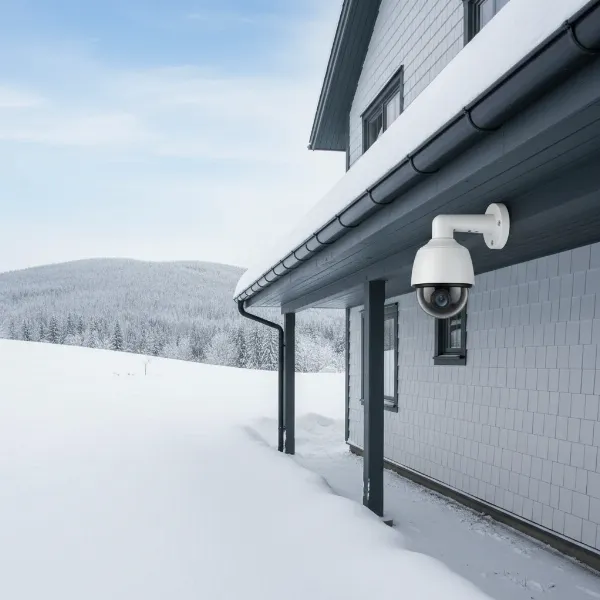 An outdoor security camera mounted securely under a protective eave, with snow and ice on the ground
Effective Usage Tips for Cold Climate Security Cameras
Even with the best hardware, proper usage and maintenance are key to longevity and effectiveness.
- Strategic Placement: Always install cameras under eaves, overhangs, or in sheltered locations. This provides a natural barrier against direct snow, freezing rain, and strong winds, reducing the likelihood of ice buildup on lenses and housings.
- Regular Cleaning: Make it a habit to regularly check and gently clear any snow, ice, or condensation from camera lenses and housings. A soft cloth or brush can prevent obstructions and maintain clear image quality.
- Power Management: For battery-powered cameras, monitor battery levels frequently, as cold drastically reduces their lifespan. Consider external cold-rated battery packs or converting to a wired solution if possible. For wired systems, ensure connections are secure and protected from the elements.
- Strong Passwords and Network Security: Regardless of climate, always use strong, unique passwords for your cameras and Wi-Fi network. Keep camera firmware updated to patch vulnerabilities and enhance performance.
- Share Access Wisely: If sharing camera access with family or trusted individuals, use the camera app’s built-in features to manage permissions securely, rather than sharing your primary account credentials.
- Respect Privacy Laws: Be aware of local laws regarding surveillance and privacy. Ensure your cameras are aimed at your property and do not inadvertently infringe on neighbors’ privacy.
Common Problems and Solutions in Cold Climates
Even purpose-built cameras can face challenges in extreme cold. Here’s how to troubleshoot common issues:
- Battery Drain: This is the most prevalent issue for wireless cameras.
- Solution: Opt for PoE or wired cameras. For battery cameras, choose models with large capacity cold-rated batteries, install supplemental solar panels (if enough sunlight), or be prepared for more frequent battery changes/recharges.
- Lens Fogging, Frost, or Ice Buildup: Obscures the camera’s view.
- Solution: Choose cameras with built-in heaters or defrosters. Strategic placement under an overhang can also help. Gently wipe the lens with a soft, non-abrasive cloth to clear obstructions.
- Sluggish or Frozen PTZ Functions: Mechanical parts can seize in extreme cold.
- Solution: Select PTZ cameras specifically rated for extremely low temperatures, or consider fixed-position cameras in areas where freezing of moving parts is a major concern.
- Connectivity Issues: Cold can affect cable integrity or Wi-Fi signal.
- Solution: Ensure all cables are outdoor-rated, properly insulated, and securely connected. For Wi-Fi, position routers closer, use Wi-Fi extenders, or switch to a hardwired connection if signal reliability is crucial.
- Image Quality Degradation: Snow, ice, or reduced light can impact clarity.
- Solution: Regular cleaning of the lens, selecting cameras with high resolution and superior night vision (e.g., color night vision or enhanced IR), and ensuring adequate supplemental lighting if necessary.
- Physical Damage to Housing or Mounts: Freeze-thaw cycles and strong winds can cause stress.
- Solution: Invest in cameras with robust, durable housings and secure mounting brackets. Regularly inspect for cracks or looseness and address them promptly.
Conclusion
Securing your property in cold climates demands more than just a standard security camera; it requires a solution specifically engineered to withstand freezing temperatures, snow, and ice. By prioritizing features like a wide operating temperature range, high IP ratings, built-in heaters, and reliable power sources like PoE, you can ensure your surveillance system remains operational and effective through the harshest winters. Thoughtful installation and regular maintenance will further enhance your camera’s longevity and performance, providing you with unwavering peace of mind. Are you ready to fortify your home against the elements and ensure constant vigilance, no matter the forecast?
Frequently Asked Questions
What temperature can most security cameras withstand?
Most standard outdoor security cameras can withstand temperatures down to about 14°F (-10°C). However, for optimal performance and to prevent issues like battery drain or lens fogging, cameras specifically designed for cold climates should be rated for temperatures of -22°F (-30°C) or even -40°F (-40°C).
Are battery-powered security cameras good for cold weather?
Battery-powered security cameras can be used in cold weather, but their performance is significantly impacted. Lithium-ion batteries lose efficiency and drain much faster in freezing temperatures, often becoming unreliable below -4°F (-20°C). For consistent performance in cold, wired (PoE) cameras are generally more dependable.
What is a good IP rating for a cold weather camera?
For reliable performance in cold, snowy, and icy conditions, a security camera should have at least an IP66 or IP67 rating. IP66 protects against powerful water jets and dust, while IP67 offers protection against temporary water immersion and is fully dust-tight, ensuring resistance to melting snow and freezing rain.
How can I prevent ice from forming on my camera lens?
The most effective way to prevent ice and frost on your camera lens is to choose a Security Camera with built-in heating elements or defrosters. Additionally, strategically mounting the camera under an eave or overhang can provide physical protection from direct precipitation, reducing the likelihood of ice buildup.
Do PoE cameras perform better in freezing temperatures?
Yes, Power over Ethernet (PoE) cameras generally perform much better in freezing temperatures compared to wireless, battery-powered alternatives. Since they receive continuous power through an Ethernet cable, they are not subject to the rapid battery drain issues that plague wireless cameras in the cold, ensuring more reliable and consistent operation.