As darkness descends, your home’s security becomes a paramount concern. While traditional security cameras often struggle in low-light conditions, advancements in night vision technology offer robust solutions. The critical decision often boils down to two primary options: infrared (IR) night vision and color night vision. Understanding their distinct capabilities, benefits, and limitations is essential for securing your property effectively and with confidence. This comprehensive guide will help you navigate these choices, ensuring you select the optimal security camera for your unique requirements.
Understanding Security Camera Night Vision
Night vision in security cameras refers to their ability to capture clear video footage in low-light or no-light environments where the human eye typically sees little or nothing. This capability is crucial for 24/7 surveillance, providing continuous monitoring even after sunset. While all night vision aims to enhance visibility in the dark, the methods and resulting image quality can vary significantly, leading to distinct user experiences and forensic utility.
Infrared (IR) Night Vision: The Traditional Approach
Infrared (IR) night vision cameras are the long-standing workhorses of nighttime surveillance, known for their reliability and effectiveness in complete darkness.
How IR Night Vision Works
IR cameras operate by emitting invisible infrared light from built-in LEDs surrounding the camera lens. This IR light illuminates the scene, much like a flashlight, but without being detectable by the human eye. The camera’s image sensor, which is sensitive to infrared wavelengths, then captures this reflected light and translates it into a visible image. The footage produced by IR cameras is typically black and white or grayscale.
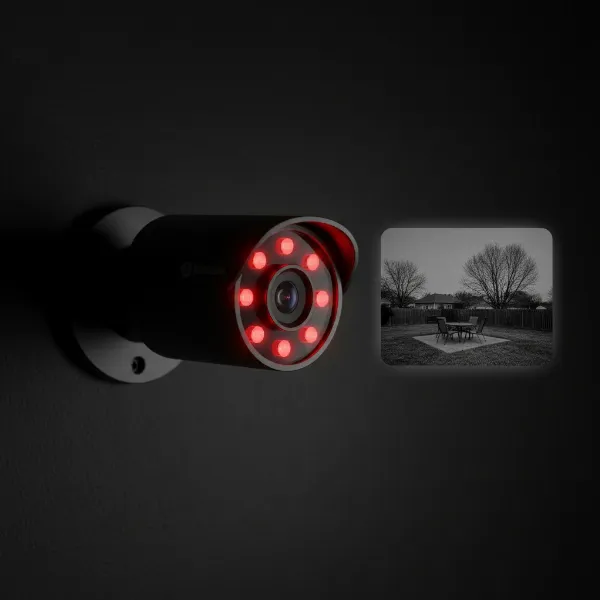 Infrared security camera captures black and white footage in total darkness using invisible IR LEDs.
Advantages of IR Night Vision
- Exceptional in Total Darkness: IR cameras excel in environments with zero ambient light, providing their own illumination to cut through pitch black conditions.
- Cost-Effective: Generally, IR cameras are more affordable than their color night vision counterparts, making them an accessible option for many homeowners and businesses.
- Covert Operation: Since the infrared light emitted is invisible, IR cameras can offer discreet surveillance without drawing attention to themselves or disturbing neighbors with visible light.
- Reliable Motion Detection: They provide clear contrast between objects and backgrounds, which is effective for detecting movement and alerting you to activity.
Disadvantages of IR Night Vision
- Lack of Color Detail: The most significant drawback is the absence of color information. This can make it challenging to identify crucial details such as the color of a suspect’s clothing, a vehicle, or other identifying characteristics, which are vital for law enforcement investigations.
- “Washed-Out” Effect: Objects too close to the camera can appear overexposed or “washed out” due to intense IR reflection, obscuring details.
- Affected by Environmental Factors: Fog, rain, or heavy snow can scatter IR light, leading to reduced visibility and image clarity.
- No Temperature Detection: Unlike thermal cameras, standard IR cameras cannot detect heat signatures, limiting their utility in certain advanced security scenarios.
Color Night Vision: A Leap in Clarity
Color night vision represents a significant advancement, aiming to provide a more detailed and contextually rich nighttime viewing experience.
How Color Night Vision Works
Color night vision technology employs several sophisticated methods to achieve full-color images in low-light conditions:
- Highly Sensitive Sensors: Many color night vision cameras, often referred to as “starlight” cameras, utilize extra-large and highly sensitive image sensors with wide apertures. These sensors can amplify even minimal ambient light (from streetlights, moonlight, or distant porch lights) into a vibrant, full-color image.
- Supplemental Visible Lighting: Some color night vision cameras incorporate built-in warm white LED floodlights. When ambient light drops below a certain threshold or motion is detected, these lights automatically activate, illuminating the scene and allowing the camera to capture full-color video, similar to daytime footage.
- Advanced Image Processing: Cutting-edge algorithms process the captured light, whether ambient or supplemental, to generate clear, vivid, and color-accurate images.
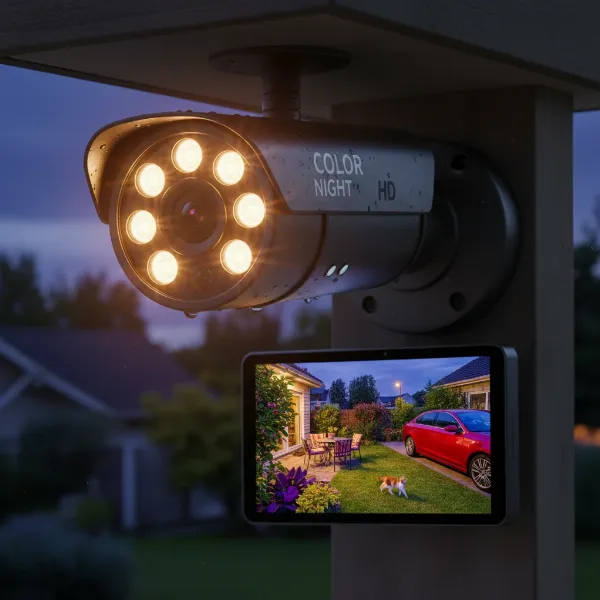 Color night vision camera capturing vivid, full-color images in low ambient light conditions.
Advantages of Color Night Vision
- Enhanced Identification: The primary benefit is the ability to capture crucial color details of objects, people, and vehicles, significantly improving identification for security purposes and forensic analysis. Imagine being able to tell police the exact color of a getaway car or an intruder’s jacket.
- More Natural Footage: Color images are more natural and intuitive for human eyes to process, making it easier to monitor live feeds and review recorded events.
- Deterrent Effect: Cameras with built-in white light LEDs can act as a visible deterrent. The sudden illumination can startle intruders, signaling that they are being watched and potentially scaring them away before an incident escalates.
- Superior Evidence Quality: For investigations, color footage provides a richer layer of data, making it invaluable for evidence collection and legal proceedings.
- Reduced False Alarms: With clearer, more detailed images, advanced analytics can often better distinguish between genuine threats and benign movements.
Disadvantages of Color Night Vision
- Requires Some Light (for passive systems): Passive color night vision (starlight) relies on existing ambient light. In truly pitch-black conditions without any light source, its performance may diminish, or it might revert to a black and white image.
- Higher Cost: Due to the more advanced sensors and technology involved, color night vision cameras are generally more expensive than basic IR models.
- Visible Illumination: For cameras using white LED floodlights, the visible light can be a disadvantage if covert surveillance is desired or if constant illumination would be a nuisance to neighbors.
- Potential for Overexposure: Similar to IR, if supplemental white lights are too powerful for a very close object, it can lead to overexposure.
Color Night Vision vs. Infrared: A Side-by-Side Comparison
To help you make an informed decision, here’s a direct comparison of key features:
| Feature | IR Night Vision (Traditional) | Color Night Vision |
|---|---|---|
| Image Quality | Black and white/grayscale, good contrast. | Full-color, vivid, more natural appearance. |
| Light Need | Effective in complete darkness (0 lux) with IR LEDs. | Requires minimal ambient light or uses built-in white LEDs. |
| Identification | Basic outline, motion detection. Difficult for color details. | Excellent for identifying colors of clothing, vehicles, etc. |
| Cost | Generally more affordable. | Typically higher. |
| Covertness | Covert (IR light is invisible). | Can be covert (starlight) or visible (white LEDs). |
| Deterrent Effect | Minimal (invisible light). | High (visible white LEDs act as a deterrent). |
Key Factors When Choosing Your Night Vision Camera
The “better” technology depends entirely on your specific security needs and environmental conditions. Consider these factors:
- Environment and Lighting Conditions:
- Pitch Black Areas (e.g., unlit backyard, remote warehouse): If there is absolutely no ambient light, traditional IR cameras that provide their own IR illumination are highly effective.
- Low-Light Areas (e.g., streetlights, porch lights, moonlight): Color night vision with sensitive “starlight” sensors will excel here, capturing vibrant colors without needing additional visible lights.
- Areas needing active deterrence: Cameras with built-in white floodlights for color night vision can be excellent for entry points or areas you want to actively discourage trespassers.
- Identification Needs: Do you need to identify precise details like the color of a jacket or vehicle? If so, color night vision is indispensable. If basic presence detection and movement are sufficient, IR might suffice.
- Budget: IR cameras often provide a solid security solution at a lower price point. Color night vision, with its advanced capabilities, typically comes at a higher investment.
- Deterrence vs. Covertness: Decide if you want your camera to be a visible deterrent (color night vision with floodlights) or to operate discreetly (IR night vision or passive color night vision).
- Weather Considerations: While IR can be affected by fog or heavy rain, some advanced color night vision cameras might also face challenges, though usually less pronounced.
Popular Security Camera Night Vision Technologies and Brands
Many leading security camera manufacturers now offer robust night vision solutions, often integrating both IR and color capabilities into a single camera. Technologies like “Starlight” are a key component of many passive color night vision systems, allowing cameras to capture color with minimal ambient light. Brands such as Hikvision (ColorVu), Dahua (Night Color), Reolink (ColorX), and Eufy are renowned for their innovative approaches to enhancing nighttime clarity, often providing cameras that can dynamically switch between IR and color modes based on light conditions or motion detection.
Tips for Maximizing Night Vision Performance
To get the most out of your night vision security camera, consider these practical tips:
- Strategic Placement: Position cameras to cover critical entry points and vulnerable areas. For IR cameras, avoid placing them too close to reflective surfaces (like walls or glass) to prevent IR glare or “washout.”
- Utilize Ambient Light: For color night vision cameras that rely on ambient light, ensure there are existing light sources nearby, such as streetlights, porch lights, or landscape lighting.
- Combine Technologies: For comprehensive coverage, consider a hybrid approach. Use IR cameras for discreet surveillance in truly dark zones and deploy color night vision cameras at high-traffic entry points where detailed identification is critical.
- Keep Lenses Clean: Dust, dirt, and cobwebs can significantly degrade night vision quality. Regularly clean the camera lens and IR/white light LEDs for optimal performance.
- Secure Power Supply: Ensure a stable power supply to prevent flickering or intermittent night vision functionality.
Common Issues and Troubleshooting with Night Vision Cameras
Even the best night vision cameras can encounter issues. Here are some common problems and potential solutions:
- Blurry or Grainy Images: This could be due to dirty lenses, environmental factors (fog, rain), insufficient light for passive color night vision, or a poor internet connection for IP cameras. Clean the lens, check light sources, and ensure strong Wi-Fi.
- IR Glare/Washout: If IR footage is completely white or overexposed, the camera might be too close to a reflective surface. Reposition the camera or consider an external IR illuminator to diffuse the light.
- Night Vision Not Activating: Check if the camera’s IR cut filter is switching properly. This usually happens automatically. Ensure the camera’s firmware is updated and settings are configured for night mode.
- Intermittent Night Vision: Unstable power supply or a faulty IR LED array can cause night vision to cut in and out. Check power connections and consider professional inspection.
- Camera Hacking/Privacy Concerns: Always use strong, unique passwords for your cameras and ensure your network is secure. Keep firmware updated to protect against vulnerabilities.
“For effective nighttime surveillance, the choice between color night vision and infrared isn’t about one being inherently ‘better,’ but rather which technology aligns more precisely with the specific security objectives and environmental characteristics of your property. Understanding these nuances empowers you to build a truly resilient security system.” – Dr. Alistair Finch, Cybersecurity & Surveillance Expert
Conclusion
Securing your property after dark demands careful consideration of your camera’s night vision capabilities. Both infrared and color night vision technologies offer significant benefits, but they cater to different needs. Traditional IR provides reliable, cost-effective black and white footage in total darkness, ideal for general motion detection and covert surveillance. Color night vision, on the other hand, excels in providing critical identifying details through vivid color images, often serving as a powerful deterrent. By evaluating your specific environment, identification requirements, and budget, you can strategically choose the right Security Camera technology—or even a combination of both—to ensure comprehensive safety and peace of mind.
What aspects of your property’s nighttime security are you most concerned about when making this choice?
Frequently Asked Questions
Can color night vision work in complete darkness?
While some advanced color night vision cameras with built-in white LED floodlights can produce color images in complete darkness by actively illuminating the scene, passive color night vision (starlight) typically requires at least some ambient light (like moonlight or streetlights) to render full color. In truly pitch-black conditions without any light source, they may revert to a black and white image.
Is infrared night vision always black and white?
Yes, traditional infrared (IR) night vision cameras, which use invisible IR light for illumination, capture images in black and white or grayscale. This is because IR light does not carry color information in the same way visible light does, providing excellent contrast and detail but without color.
Are color night vision cameras more expensive than IR cameras?
Generally, yes. Color night vision cameras incorporate more advanced sensors, lenses, and sometimes built-in white light LEDs to achieve color images in low light, which typically makes them more expensive than standard infrared cameras. However, prices are becoming more competitive as the technology evolves.