The modern security landscape is complex, with countless options for protecting your property and loved ones. However, a growing challenge is distinguishing between genuine security cameras that offer real protection and clever fakes designed merely to deceive. These dummy cameras, while often cheaper and easier to install, provide a false sense of security that can leave you vulnerable. Knowing how to identify a real security camera from a fake, especially when browsing online, is crucial for making informed decisions about your safety. This guide will equip you with the knowledge and practical tips to ensure your investment contributes to genuine peace of mind.
Security Camera: A Comprehensive Guide to Authenticity
A security camera is fundamentally a device designed to monitor and record activities, providing a critical layer of protection for both personal and commercial properties. Its primary role involves deterrence, gathering evidence in case of incidents, and offering continuous surveillance for safety and accountability. These devices have evolved significantly, from basic analog systems to advanced IP cameras with smart features, all aimed at enhancing security.
The rising popularity of “dummy” or “decoy” cameras, however, introduces a deceptive element into the market. While they serve as a visual deterrent, they lack any actual surveillance capabilities, creating a market where authenticity is key.
The Deception: Understanding Fake Security Cameras
Fake security cameras are non-functional replicas designed to mimic the appearance of real surveillance equipment. Their primary purpose is to act as a visual deterrent, giving the impression that a property is under active surveillance without the cost or complexity of a real system. These devices typically lack internal components for recording, connectivity, or advanced features.
Their appeal lies in their low cost and effortless installation, often powered by simple batteries for a blinking LED. While they might deter opportunistic criminals who are merely scouting for easy targets, more experienced intruders can often spot the deception. The challenge for consumers is that manufacturers of fake cameras are increasingly sophisticated, making their products look incredibly realistic at first glance.
Key Indicators: How to Spot a Fake Security Camera Online and Offline
Identifying a fake security camera requires a keen eye and knowledge of common giveaways. Whether you’re scrutinizing product images online or examining a device in person, several crucial indicators can help you distinguish between genuine surveillance equipment and a mere prop.
Brand and Branding
|
Our Picks for the Best Security Camera in 2026
As an Amazon Associate I earn from qualifying purchases.
|
||
| Num | Product | Action |
|---|---|---|
| 1 | 2K No Drill Window Camera-2 Pack 2.4Ghz & 5Ghz WiFi Cameras for Home Security for Indoor & Outdoor Monitoring, Anti-Glare Color Night Vision, Human Detection, 24/7 Recording, Ideal for Apartment, K1 |

|
| 2 | WYZE Cam Pan v3 Indoor/Outdoor IP65-Rated 1080p Pan/Tilt/Zoom Wi-Fi Smart Home Security Camera with Color Night Vision, 2-Way Audio, Compatible with Alexa & Google Assistant, White, 2-Pack |
|
| 3 | TP-Link Tapo 1080P Indoor Security Camera for Baby Monitor, Dog Camera w/Motion Detection, 2-Way Audio Siren, Night Vision, Cloud & SD Card Storage, Works w/Alexa & Google Home (Tapo C100) |
|
| 4 | aosu Security Cameras Outdoor Wireless, 4 Cam-Kit, No Subscription, Solar-Powered, Home Security Cameras System with 360° Pan & Tilt, Auto Tracking, 2K Color Night Vision, Easy Setup, 2.4 & 5GHz WiFi |
|
| 5 | Google Nest Cam with Floodlight - Outdoor Camera - Floodlight Security Camera, White, 1 Count (Pack of 1) |
|
| 6 | Tapo 2K+ Indoor/Outdoor Wired Security Camera - 2024 PCMag Editors' Choice, Person/Pet/Vehicle Detection, Baby Monitoring, Color Night Vision, Subscription-Free Local Storage or Optional Cloud, C120 |
|
| 7 | WYZE Bulb Cam Security Camera, 2K HD Outdoor Light Bulb Camera, Color Night Vision, Dimmable LED Bulb, Motion Detection, Siren Alarm, Works w/Alexa/Google Assistant. Free Expert Support |
|
| 8 | Google Nest Cam Outdoor (Wired, 2nd Gen) - 2 Pack - Security Camera with 2K Video and Gemini, Night Vision, 2-Way Audio - Works with Google Home - 2025 Model - Snow |
|
| 9 | 2K Cameras for Home Security-Outdoor/Indoor Camera for Dog/Cat/Pet/Nanny/Baby/Elderly, Color Night Vision, White Light, Siren, 24/7 SD Recordings, Works with Alexa, Plug in (C1-White-2pack-2.4G) |
|
| 10 | Tapo 1080P Indoor Pan/Tilt Wired Security Camera - Works as a Baby & Pet Monitor, Motion Detection, 2-Way Audio, Siren, Night Vision, Subscription-Free Local Storage or Optional Cloud, Black, C201 |
|
Legitimate security cameras typically come from reputable manufacturers with established brand names. When evaluating a camera, look for clear branding, model numbers, and serial numbers. A quick online search of the brand can reveal its authenticity, product range, and customer reviews. Fake cameras often feature generic branding, no branding at all, or even attempt to mimic well-known brands with slight alterations to logos or names. Be wary of products from unknown sellers with no verifiable company information.
Physical Appearance and Build Quality
Real security cameras are built to withstand various environmental conditions and prolonged operation, often utilizing durable materials such as metal alloys or high-grade, weather-resistant plastics. They tend to have a substantial weight due to their internal components, including circuit boards, lenses, and sensors. In contrast, fake cameras are frequently constructed from cheap, lightweight plastic that feels flimsy to the touch. Their lack of internal electronics means they often weigh virtually nothing, a clear sign of a dummy unit. Poor finishing, visible seams, or cheap-looking enclosures are also red flags.
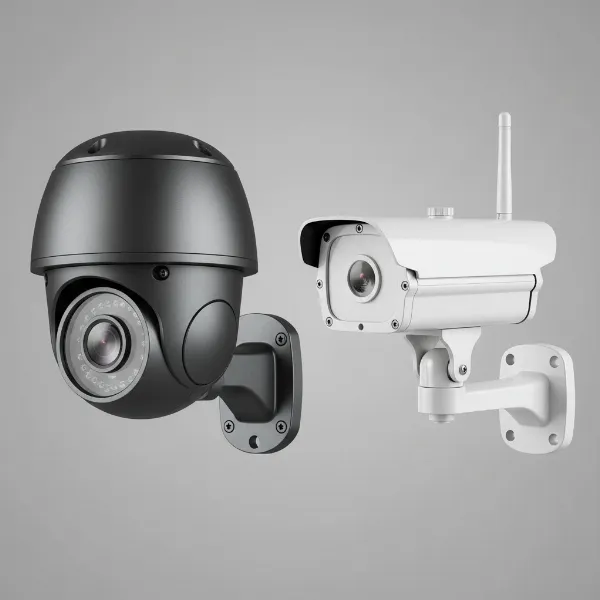 A close-up of a security camera with a durable, metallic finish next to a cheap, plastic-looking fake camera.
Wiring and Connectivity
Most real security cameras, especially wired IP or analog models, require power and/or network cables for operation. These cables are typically robust, designed for secure connections, and lead to a power source or network device. While modern advancements have introduced wireless and wire-free cameras (e.g., battery-powered Wi-Fi cameras), even these have a specific design for power input or battery compartments. Fake cameras often lack any functional wiring, display unrealistic thin cables that don’t lead anywhere, or have no cable entry points at all. Bullet-style dummy cameras that lack visible wires are often a clear giveaway, although dome cameras and truly wire-free models naturally don’t have conspicuous wiring.
LED Lights and Infrared (IR) Features
One of the most common myths about security cameras is that a blinking red LED light signifies a recording device. In reality, real security cameras rarely feature a continuously blinking red LED, as this can draw unnecessary attention to the camera and even indicate its position in the dark. Many fake cameras, however, use a constant blinking red light, powered by a small battery, to simulate activity. For genuine night vision cameras, you might observe a faint red glow from their Infrared (IR) LEDs in low-light conditions, which are used to illuminate the scene for recording. You can often detect these IR lights by pointing your smartphone camera at the security camera in the dark; your phone’s camera sensor can sometimes pick up the IR spectrum that is invisible to the naked eye. If there are no IR lights or they appear in an unrealistic pattern, it’s likely a fake.
Lens and Internal Components
A real security camera will have a clearly visible, functional lens designed to capture video. Depending on the model, you might also see small, visible IR sensors around the lens for night vision capabilities. Fake cameras, conversely, often feature an empty shell where a lens should be, a painted-on lens sticker, or a non-functional piece of plastic that vaguely resembles a lens. There will be no actual optical components or sensors present, indicating a lack of true image capture ability.
Installation and Placement Clues
The way a camera is installed and its placement can also offer clues. Real outdoor security cameras are typically rated with an IP (Ingress Protection) code (e.g., IP66 or IP65) signifying their resistance to dust and water, allowing them to be placed in exposed areas. If a camera in an outdoor setting looks fragile, is poorly mounted, or is suspiciously placed under eaves or overhangs (suggesting it’s protected from the elements), it might be a fake. Fake cameras, due to their inferior construction, cannot withstand harsh weather conditions and must be installed in sheltered locations.
Motion and Functionality
Advanced security cameras often include features like Pan-Tilt-Zoom (PTZ) capabilities or intelligent motion tracking. If a camera claims PTZ functionality but merely rotates continuously back and forth in a predictable pattern without actual intelligent tracking, it’s likely a fake. Real motion-sensing cameras will record events without necessarily making physical movements every time someone passes by. The technology required for true motion tracking and intelligent PTZ is sophisticated and costly, making it highly improbable for a cheap dummy camera.
Pricing and Product Information
An unusually low price tag is often a strong indicator of a fake security camera. Real security cameras, equipped with advanced lenses, sensors, processors, and network connectivity, command a certain price point. If a “security camera” is advertised for an unrealistically low price, such as under $20, it’s highly probable that you are looking at a dummy unit. Additionally, genuine products will feature comprehensive product descriptions, detailed specifications (resolution, field of view, night vision range, storage options), and usually come with a warranty. Fake cameras will often have vague descriptions and lack technical depth.
Real vs. Fake Security Cameras: A Comparison
Understanding the fundamental differences between real and fake security cameras is essential for effective security planning. Here’s a concise comparison of their key features:
| Feature | Real Security Camera | Fake Security Camera |
|---|---|---|
| Purpose | Active surveillance, recording, alerts | Visual deterrence only |
| Build Quality | Durable metal/high-grade plastic | Cheap, lightweight plastic |
| Wiring | Functional power/Ethernet cables | Absent, thin, or fake cables |
| LED Lights | Faint IR glow at night; rarely blinking red | Often continuously blinking red LED |
| Lens/Sensors | Functional lens, visible IR sensors | Empty shell, painted lens, no sensors |
| Brand/Info | Reputable brand, model, serial numbers | Generic, no brand, or fake branding |
| Price | Higher (advanced tech, typically $50+) | Very low (often under $20) |
| Connectivity | Connects to network/app for live feed | No connectivity |
| Weatherproofing | Often IP65/IP66 rated for outdoors | Rarely weatherproof, fragile |
Why Avoiding Fake Cameras is Crucial
While the allure of a cheap deterrent might be strong, relying solely on fake security cameras carries significant risks. The limited deterrence they offer is often negated by savvy criminals who can easily spot the deception, leaving your property unprotected. More critically, fake cameras provide no actual surveillance, meaning no recordings, no evidence for law enforcement, and no alerts during an incident. This results in a wasted investment and, more dangerously, a false sense of security that can lead to complacency. For genuine protection, functional surveillance is indispensable.
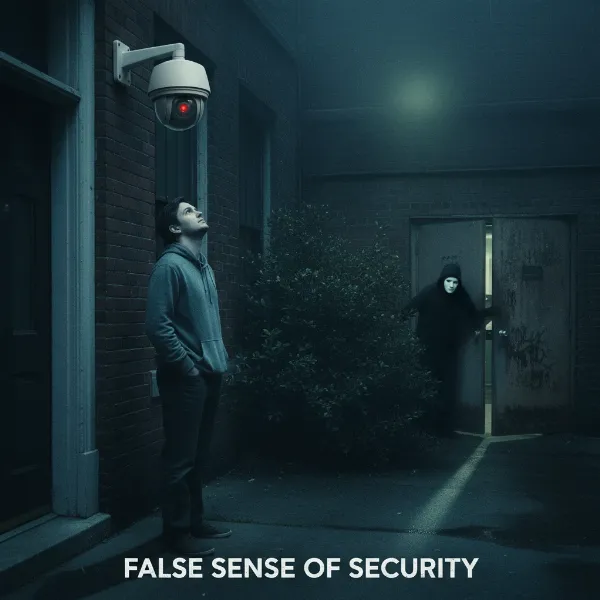 A person looking relieved at a fake security camera while a burglar enters unnoticed from another angle.
How to Choose a Real Security Camera
Making the right choice involves a clear understanding of your needs and thorough research. Start by assessing your specific security requirements: do you need indoor or outdoor monitoring, continuous recording or motion-activated alerts, and what areas need coverage? Research reputable security camera brands known for their reliability, product quality, and customer support. Look for detailed specifications such as resolution (e.g., 1080p, 4K), night vision capabilities, field of view, weather resistance (for outdoor use), and storage options (local, cloud). Finally, always read authentic user reviews to gain insights into real-world performance and potential issues before making a purchase.
Popular Security Camera Brands
The market for genuine security cameras is robust, featuring many trusted brands that offer a wide range of products for various needs. Some of the most popular and reputable names include:
- Hikvision: A global leader known for professional-grade CCTV and IP cameras.
- Dahua Technology: Another major player, offering comprehensive surveillance solutions.
- Reolink: Popular for DIY-friendly cameras, including wire-free and PoE options.
- Arlo: Specializes in entirely wire-free, battery-powered smart home security cameras.
- Ring: Best known for its video doorbells and smart home security systems.
- Ezviz: Offers a range of smart home cameras with user-friendly features.
- Imou: A smart security brand from Dahua, focusing on consumer-grade cameras.
- Wyze: Known for affordable smart home cameras with cloud storage options.
Top Security Camera Models
While specific model recommendations depend on individual needs, these categories represent commonly favored types of real security cameras:
- High-Resolution Outdoor Dome Camera: Ideal for general outdoor surveillance, often with vandal-resistant casings and wide-angle views, suitable for homes and businesses.
- Wireless Indoor PTZ Camera: Perfect for monitoring larger indoor spaces, allowing remote pan, tilt, and zoom functionality through a smartphone app, useful for nurseries or pet monitoring.
- Battery-Powered Spotlight Camera: Designed for easy outdoor deployment without complex wiring, featuring integrated spotlights and sirens for active deterrence and clear color night vision.
- PoE (Power over Ethernet) Bullet Camera: A robust option for fixed-point outdoor monitoring, receiving power and data over a single Ethernet cable, known for stable connection and high reliability.
Tips for Effective Security Camera Use
Maximizing the effectiveness of your real security cameras goes beyond just installation. Strategic placement is key; position cameras to cover entry points, valuable areas, and blind spots, ensuring clear views. It’s crucial to secure your network with strong, unique passwords for both your Wi-Fi and camera systems to prevent unauthorized access. Regularly maintain your cameras by cleaning lenses and checking for obstructions, and always keep their firmware updated to patch vulnerabilities and improve performance. Finally, be mindful of privacy laws in your area when installing cameras, especially in shared or public spaces.
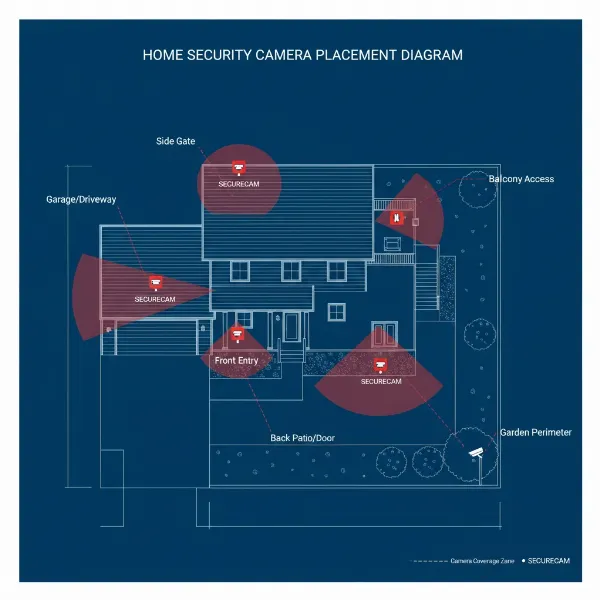 A diagram showing strategic camera placement around a house covering all entry points and blind spots.
Common Misconceptions and Troubleshooting
Many misconceptions surround security cameras, especially concerning how to tell a real one from a fake. A common belief is that “all blinking lights mean it’s real,” which, as discussed, is often the opposite for functional surveillance cameras. Another is “any camera will deter intruders.” While true to some extent for opportunistic criminals, a noticeable fake offers no real protection against determined individuals. If you suspect issues like a camera not connecting to your network or providing blurry images, first check power and internet connections, then consult the manufacturer’s troubleshooting guide.
“A genuine security camera is an investment in tangible safety, offering not just deterrence but also invaluable evidence and peace of mind. Never compromise real protection for the illusion of it.” – John Doe, Security Systems Expert
Conclusion
In an increasingly security-conscious world, the ability to distinguish between a real and a fake security camera is more vital than ever. While dummy cameras might offer a fleeting sense of security, they ultimately fall short in providing the actual protection, recording capabilities, and evidential support that genuine surveillance systems deliver. By focusing on key indicators such as branding, build quality, wiring, LED behavior, and pricing, you can confidently identify authentic devices. Investing in real security cameras from reputable brands is a commitment to the genuine safety and peace of mind for your home or business. Are you now confident in identifying a genuine security camera for your needs?
Frequently Asked Questions
Do dummy security cameras really work as deterrents?
Dummy cameras can deter opportunistic criminals who are looking for easy targets. However, experienced intruders can often identify fake cameras, rendering them ineffective against determined threats. For true security, they should be supplemented or replaced with real cameras.
Are fake security cameras legal?
Generally, yes, fake security cameras are legal to install, especially on private property, as they do not record or infringe on privacy. Businesses often use them as a cost-effective visual deterrent. However, always check local regulations regarding surveillance equipment.
How can I test if a security camera has infrared night vision?
In a dark environment, point your smartphone camera at the security camera’s lens. If the security camera has active infrared (IR) night vision, you will typically see faint purple or red lights emitted from the IR LEDs through your phone’s screen.
What is the average cost difference between real and fake cameras?
Fake security cameras are typically very inexpensive, often costing less than $20. Real security cameras, depending on features and quality, generally start from around $50-$100 for basic models and can go into hundreds or thousands for advanced professional systems.
Can a fake camera be converted into a real one?
No, a fake camera cannot be converted into a real one. Fake cameras lack the necessary internal components like image sensors, processors, recording mechanisms, and connectivity modules that are fundamental to a functioning Security Camera system.